Discovery Response Objection App
The Discovery Response Objection App helps litigation teams handle incoming discovery by transforming opposing counsel’s interrogatories, requests for production, and requests for admission into a formatted draft response document. It is designed to reduce the repetitive work of re-typing requests and re-applying standard objections, while preserving full attorney control over the case-specific narrative and substantive responses.
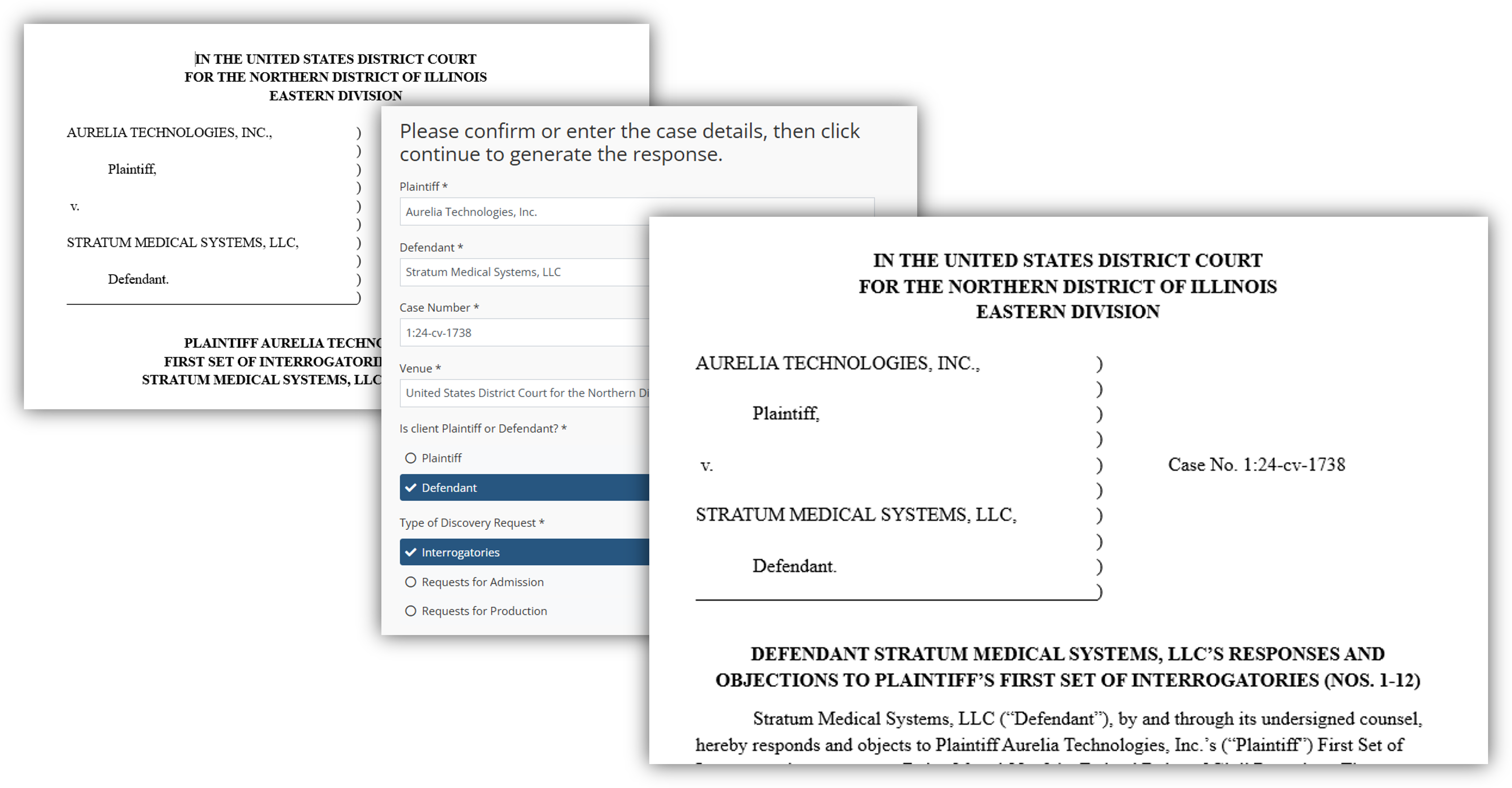
The attorney or staff member opens the app and selects the discovery request using a document selector. The app extracts and displays key case details from the request for confirmation, then builds a response document based on a predefined template. Each interrogatory, RFP, or RFA is carried over into the response format, and the app generates an objection section grounded in a playbook stored in a data table (for example, standard objections to scope, burden, privilege, or form, as defined by the firm or practice group).
The resulting draft response document includes, for each request, the original text, a playbook-driven objection, and a clearly marked placeholder for the user’s own substantive response. The app deliberately does not attempt to draft any case-specific factual content, ensuring that strategy, admissions, and narrative remain entirely in the practitioner’s hands.
Key benefits include:
- Reduce time spent formatting and organizing discovery responses.
- Promote consistent, playbook-aligned objection language across matters and team members.
- Enable efficient delegation to paralegals or assistants while preserving attorney control of substantive content.
- Support quality control by centralizing where objections come from and how they are applied.
For litigators and their teams, this app offers a structured starting point for discovery responses, allowing them to focus on the case-specific analysis while the app handles repetitive formatting and standardized objection language.
Get started
Generate draft discovery response documents that insert playbook-based objections for each request and leave structured placeholders for case-specific responses.

Next step: Talk to an expert
Get practical guidance on putting this app to work in a free virtual office hour with a PatternBuilder expert.
Book an office hourSimilar Legal Apps