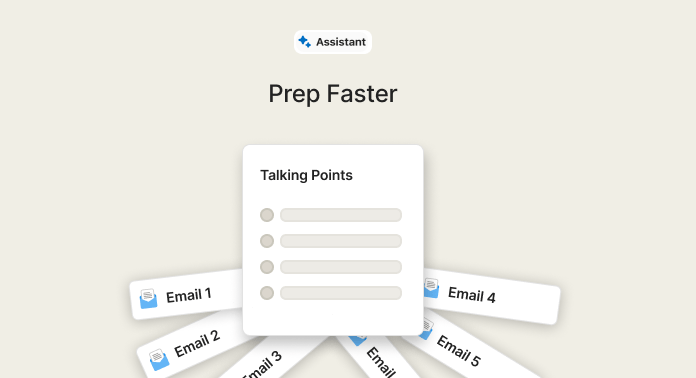
Prepping for a Meet and Confer

Catch which issues are still open before the call, with citations on every finding.

Before a meet and confer, you need to know: where does each side stand, and what is still unresolved? The answer is spread across letters and emails, and positions often move between the first letter and the call.

This lesson answers the questions that organize the correspondence for you. Each prompt asks for findings. You make the call.

Below are five prompts: three steps in order, then two optional ones.

Before you start

  • Selection controls the answer. The Assistant reads only what you select, so include every letter and follow-up email.
  • Ask for the document and provision. Ask the Assistant to name the letter or email and the sentence behind each point.
  • Fill in the [brackets]. Replace each one with the specifics from your matter, such as document names and which side you represent, before you run the prompt.

Prompts

1. Get both sides in one read

Select the meet-and-confer letter and the response letter. Use this instead of "Summarize this letter." Look for each issue shown separately with both sides, the reason each side gives, and the real point of disagreement. Click a citation to confirm the position is attributed to the right side.
Summarize the discovery positions in [the meet-and-confer letter] and [the response letter]. State what each side wants, why, and where they disagree. Return findings only.
Copy prompt to clipboard

2. Spot what is still unresolved

Select the letters plus every follow-up email since. Turn on Think Longer, which enables deeper reasoning and may increase response time, because this prompt compares positions across several documents. Use this instead of "What happened in these emails?" Open the citation behind each resolved issue and confirm both sides agreed.
Compare the positions in [the original letters] to [the follow-up emails or correspondence]. List which issues are resolved and which are still open. For each one, cite the sentence and the sender or letter it comes from.
Copy prompt to clipboard

3. Walk in with talking points

Select the full correspondence chain. Turn on Think Longer, which enables deeper reasoning and may increase response time, because this prompt reasons across the whole chain. Use this instead of "Give me some talking points." The talking points and fallbacks are suggestions for the attorney to accept or reject. Open the citation behind each likely counter and confirm the other side said it.
Based on the open issues in [the correspondence], draft three talking points for each open issue: [our client]'s position, their likely counter, and a fallback we could offer.
Copy prompt to clipboard

Optional: Flag deadlines

Select the full correspondence chain. Use this to catch a date that bears on the call. Check each date against the cited sentence.
Summarize the discovery positions in [the meet-and-confer letter] and [the response letter]. State what each side wants, why, and where they disagree. Return findings only.
Copy prompt to clipboard

Optional: List settled points

Select the letters and follow-up emails. Use this to see what is already closed before the call. Open the citation to confirm each agreement came from the side you expect.
Summarize the discovery positions in [the meet-and-confer letter] and [the response letter]. State what each side wants, why, and where they disagree. Return findings only.
Copy prompt to clipboard

Trust but verify

Every answer has blue numbers at the end, those are the citations. Click those numbers to see an excerpt of the document your answer came from. If needed, click the excerpt to see the answer highlighted in your document.

Challenge

Pick a real matter with a meet and confer this week. Select the letters and follow-up emails, fill in the brackets, and run Prompt 2.

Expert Office Hours

mondays
8am PST / 11am EST
wednesdays
12pm PST / 3pm EST
Sign up

Find your next session

Browse sessions